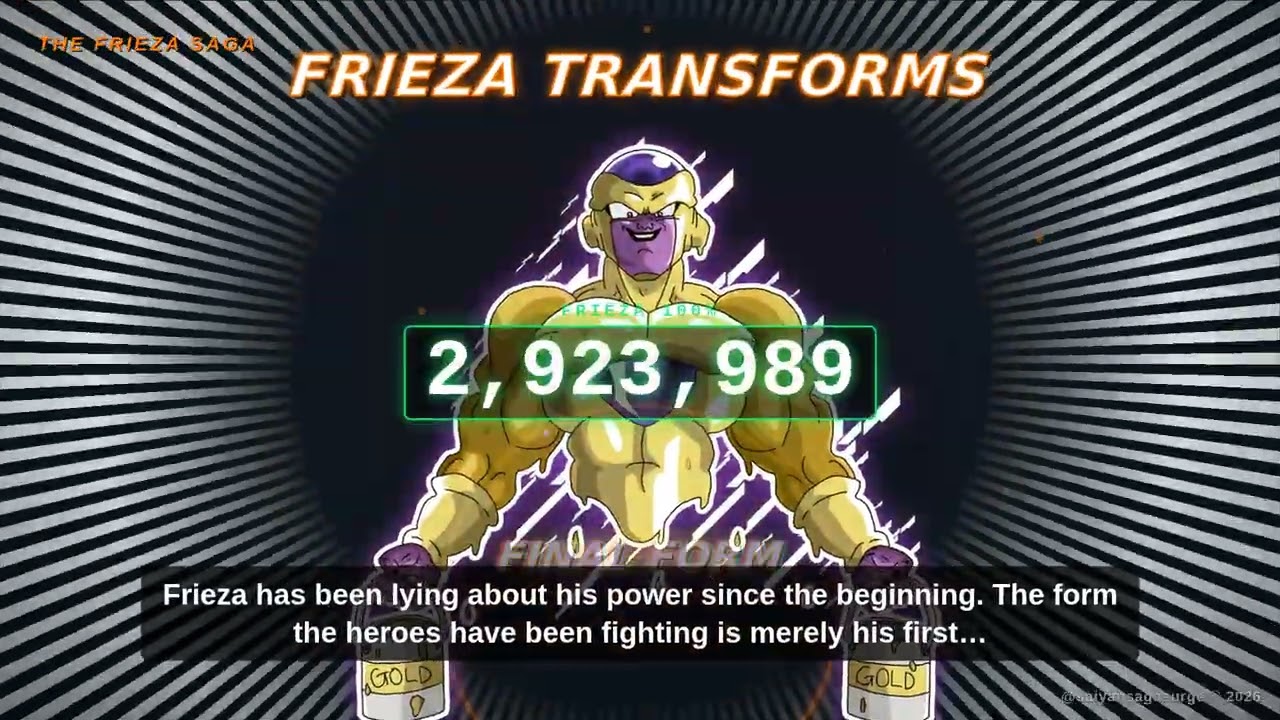
The ENTIRE Frieza Saga Explained Dragon Ball Z
June 25, 2026 — LiveStream
As an Amazon Associate I earn from qualifying purchases.
As an Amazon Associate I earn from qualifying purchases.
As an Amazon Associate I earn from qualifying purchases.
As an Amazon Associate I earn from qualifying purchases.
As an Amazon Associate I earn from qualifying purchases.
As an Amazon Associate I earn from qualifying purchases.
As an Amazon Associate I earn from qualifying purchases.
As an Amazon Associate I earn from qualifying purchases.
As an Amazon Associate I earn from qualifying purchases.
As an Amazon Associate I earn from qualifying purchases.
As an Amazon Associate I earn from qualifying purchases.
As an Amazon Associate I earn from qualifying purchases.
As an Amazon Associate I earn from qualifying purchases.
As an Amazon Associate I earn from qualifying purchases.
As an Amazon Associate I earn from qualifying purchases.
As an Amazon Associate I earn from qualifying purchases.
As an Amazon Associate I earn from qualifying purchases.
As an Amazon Associate I earn from qualifying purchases.
As an Amazon Associate I earn from qualifying purchases.
As an Amazon Associate I earn from qualifying purchases.
As an Amazon Associate I earn from qualifying purchases.
As an Amazon Associate I earn from qualifying purchases.
As an Amazon Associate I earn from qualifying purchases.
As an Amazon Associate I earn from qualifying purchases.
As an Amazon Associate I earn from qualifying purchases.
As an Amazon Associate I earn from qualifying purchases.
As an Amazon Associate I earn from qualifying purchases.
As an Amazon Associate I earn from qualifying purchases.
As an Amazon Associate I earn from qualifying purchases.
As an Amazon Associate I earn from qualifying purchases.
As an Amazon Associate I earn from qualifying purchases.
As an Amazon Associate I earn from qualifying purchases.
As an Amazon Associate I earn from qualifying purchases.
As an Amazon Associate I earn from qualifying purchases.
As an Amazon Associate I earn from qualifying purchases.
As an Amazon Associate I earn from qualifying purchases.
As an Amazon Associate I earn from qualifying purchases.
As an Amazon Associate I earn from qualifying purchases.
As an Amazon Associate I earn from qualifying purchases.
As an Amazon Associate I earn from qualifying purchases.
As an Amazon Associate I earn from qualifying purchases.
As an Amazon Associate I earn from qualifying purchases.
As an Amazon Associate I earn from qualifying purchases.
As an Amazon Associate I earn from qualifying purchases.
As an Amazon Associate I earn from qualifying purchases.
As an Amazon Associate I earn from qualifying purchases.
As an Amazon Associate I earn from qualifying purchases.
As an Amazon Associate I earn from qualifying purchases.
As an Amazon Associate I earn from qualifying purchases.
As an Amazon Associate I earn from qualifying purchases.
As an Amazon Associate I earn from qualifying purchases.
As an Amazon Associate I earn from qualifying purchases.
As an Amazon Associate I earn from qualifying purchases.
As an Amazon Associate I earn from qualifying purchases.
As an Amazon Associate I earn from qualifying purchases.
As an Amazon Associate I earn from qualifying purchases.
As an Amazon Associate I earn from qualifying purchases.
As an Amazon Associate I earn from qualifying purchases.
As an Amazon Associate I earn from qualifying purchases.
As an Amazon Associate I earn from qualifying purchases.
As an Amazon Associate I earn from qualifying purchases.
As an Amazon Associate I earn from qualifying purchases.
As an Amazon Associate I earn from qualifying purchases.
As an Amazon Associate I earn from qualifying purchases.
As an Amazon Associate I earn from qualifying purchases.
As an Amazon Associate I earn from qualifying purchases.
As an Amazon Associate I earn from qualifying purchases.
As an Amazon Associate I earn from qualifying purchases.
As an Amazon Associate I earn from qualifying purchases.
As an Amazon Associate I earn from qualifying purchases.
As an Amazon Associate I earn from qualifying purchases.
🛒 Recommended gear on AmazonDisclosure: some links above are affiliate links — if you buy through them I may earn a small commission at no extra cost to you. Thanks for supporting the channel!
As an Amazon Associate I earn from qualifying purchases.
The Cosmic Conflagration: Unleashing the Unfathomable Power of the Frieza Saga
Few arcs in anime history have etched themselves into the collective consciousness with the indelible force of Dragon Ball Z's Frieza Saga. It’s not merely a story; it's a cosmic ballet of despair, defiance, and the explosive birth of a legend that forever redefined what shonen anime could achieve. This saga isn't just about escalating power levels; it's a profound journey into the heart of galactic tyranny, the weight of prophecy, and the raw, unbridled rage that transforms a warrior into a god. For any true Dragon Ball aficionado, this is the hallowed ground where the mythos truly solidified, where Goku ascended beyond mortal limits, and where the universe itself trembled. Strap in, because we're diving deep into the electrifying core of what makes the Frieza Saga an eternal masterpiece.
The Tyrant's Shadow: Fear, Genocide, and the Seeds of Vengeance
The Frieza Saga doesn't just introduce a villain; it unveils an entire galactic empire built on terror and conquest, personified by the chillingly polite yet utterly ruthless Emperor Frieza. From his very first appearance, surrounded by his terrifying henchmen Zarbon and Dodoria, Frieza radiates an aura of absolute power and sadistic nonchalance. What sets him apart from previous DBZ antagonists like Vegeta or Nappa isn't just his strength, but his calculated cruelty and his foundational role in the destruction of Planet Vegeta, the Saiyan homeworld. This isn't merely an act of war; it's a genocidal preemptive strike, driven by Frieza's deep-seated fear of the Super Saiyan legend – a prophecy he ironically fulfills through his own actions.
His arrival on Namek isn't for conquest, but for the Dragon Balls, seeking immortality to cement his terrifying reign. The systematic extermination of the Namekian population, their villages incinerated, their elders brutally murdered, paints a vivid picture of a monster unbound by morality. Frieza doesn't just defeat; he humiliates, he tortures, he revels in the suffering of others. His transformations aren't just power-ups; they are revelations of increasingly monstrous forms, each more terrifying than the last, stripping away any pretense of his 'elegant' initial appearance. This journey into his true forms is a masterclass in villainous design, escalating the sense of dread and hopelessness that permeates the early stages of the Namek conflict. The saga masterfully establishes Frieza not just as an enemy, but as the ultimate antithesis to everything our heroes stand for, a force of cosmic evil that demands absolute annihilation.
A Desperate Gambit: Namek's Bleeding Heart and the Saiyan's Redemption Arc
With Goku hospitalized after his battle with Vegeta on Earth, the fate of the universe falls to a motley crew: Krillin, Gohan, and the recently turned (but still morally ambiguous) Vegeta. Their journey to Namek is fraught with peril, a desperate race against Frieza's forces to gather the Dragon Balls and revive their fallen comrades. This section of the saga is a brilliant chess match, with each faction scrambling for the orbs, leading to thrilling stealth missions, tense standoffs, and the brutal introduction of Frieza's elite Ginyu Force.
It's here that the narrative skillfully develops supporting characters. Krillin, often a comedic relief, steps up with surprising bravery and ingenuity, his bonds of friendship driving him forward. Gohan, still a child, repeatedly taps into his explosive latent power, a foreshadowing of the warrior he will become. But perhaps the most compelling development belongs to Vegeta. His arrival on Namek is initially driven by his own selfish desires for immortality and vengeance against Frieza, but as he witnesses Frieza's atrocities and is forced into uneasy alliances with his former enemies, a profound shift begins. Vegeta's raw arrogance and brutal pragmatism clash constantly with Krillin and Gohan's compassionate nature, yet his Saiyan pride is deeply wounded by Frieza's casual disregard for his race. His ultimate, tearful plea to Goku to avenge the Saiyans is one of the most poignant moments in the entire series, cementing his transformation from pure villain to complex anti-hero, forever indebted to and eternally rivaling Goku. The Ginyu Force, with their bizarre poses and unique abilities, provide a crucial test for the Z-Fighters, pushing them to their limits and further establishing the sheer power disparity that Goku will eventually need to overcome.
The Legend Awakens: Goku's Ascent to Super Saiyan and the Cosmic Shift
All the despair, all the sacrifice, all the agonizing battles against Frieza's overwhelming power culminate in the legendary confrontation between Goku and the Emperor. The sheer scale of this battle is unprecedented, shaking Namek to its very core. Frieza, in his final, terrifying form, appears invincible, his ki attacks leveling mountains and his physical prowess unmatched. Goku pushes himself beyond every limit, utilizing Kaioken x20 and the Spirit Bomb, yet still, Frieza endures. The tension is palpable, the hopelessness absolute. It is a testament to the masterful storytelling that even after Goku's most powerful attacks, Frieza remains standing, mocking, triumphant.
Then comes the moment etched into anime history: Krillin’s brutal, agonizing death at Frieza's hands. This wasn't just a casualty; it was the precise, devastating trigger that shattered Goku's calm, pushed him past the brink of his humanity, and ignited the ancient, dormant power within him. The primal scream, the golden aura, the defiant stand against the universe's ultimate tyrant – the Super Saiyan transformation is not just a power-up; it is a spiritual awakening. It's the fulfillment of a generations-old prophecy, a symbol of righteous fury against unmitigated evil. This moment changes everything. The power dynamic flips entirely; the tables are turned with devastating finality. Goku, once struggling, now dominates, his power unfathomable, his demeanor hardened by rage. The five minutes of Namek's destruction become a metaphor for the eternity of their struggle, a race against cosmic annihilation as the newly-minted Super Saiyan exacts a terrifying vengeance. This iconic transformation reshaped the entire Dragon Ball universe, setting the stage for every subsequent saga and defining the very essence of what it means to be a Saiyan.
Beyond the Battlefield: The Frieza Saga's Undying Legacy
While the climactic battle between Super Saiyan Goku and Frieza on a dying Namek is the saga's undeniable centerpiece, its influence extends far beyond the exploding planet. The Frieza Saga fundamentally changed Dragon Ball Z's trajectory, solidifying themes that would resonate throughout the series. It established the concept of linear power progression and transformations as core tenets of shonen storytelling, inspiring countless subsequent anime. The introduction of the Super Saiyan form wasn't just a plot device; it was a defining characteristic, a legendary milestone that every Saiyan character would subsequently strive for, from Vegeta to Trunks and Goten.
Moreover, the saga delved deeper into the Saiyan mythology, detailing their warrior culture, their history under Frieza's thumb, and their ultimate fate, adding rich layers to Goku's origins. It also cemented Vegeta's role as the eternal rival, his pride shattered and rebuilt in the crucible of this conflict, forever chasing Goku's power. Even Frieza himself, despite his defeat, became an iconic villain whose shadow loomed large over future arcs, proving that some evils are too deeply ingrained to be completely eradicated. The emotional weight of Krillin's death, the sheer desperation of the Z-Fighters, and the raw, cathartic triumph of Goku's transformation created a narrative blueprint for epic conflict. The Frieza Saga wasn't just an arc; it was a seismic event in anime, a narrative supernova that continues to burn brightly in the hearts of fans, a benchmark against which all other sagas are measured.
Common Mistakes When Discussing the Frieza Saga
- Misinterpreting the "Five Minutes": The infamous "five minutes until Namek explodes" is often taken literally. In reality, it's a dramatic device, stretching the climactic battle over multiple episodes to heighten tension, rather than a strict timestamp.
- Underestimating Frieza's Intelligence: Many focus solely on Frieza's power, overlooking his cunning, strategic mind, and his ability to manipulate and instill fear. He's not just a brute; he's a shrewd galactic emperor.
- Ignoring Supporting Characters' Contributions: While Goku's transformation is central, the bravery and sacrifice of Krillin, Gohan, Piccolo, and even Vegeta in their battles against Frieza's forces are crucial to setting the stage and making Goku's triumph possible.
- Believing Vegeta's Turn was Instantaneous: Vegeta's shift from villain to anti-hero is a gradual process that truly begins on Namek, fueled by his hatred for Frieza and his own Saiyan pride, rather than an immediate embrace of heroism.
- Downplaying the Super Saiyan Prophecy: The transformation wasn't random; it was the fulfillment of a deeply ingrained Saiyan legend, adding layers of destiny and historical weight to Goku's ultimate power-up.
Key Takeaways from the Frieza Saga
- The Birth of a Legend: The Frieza Saga birthed the iconic Super Saiyan transformation, a defining moment that forever changed Dragon Ball Z and established a new paradigm for power and conflict in anime.
- Ultimate Villainy Defined: Frieza set the benchmark for absolute, charismatic evil, driven by a deep-seated fear that paradoxically led to the creation of his greatest nightmare.
- Emotional Catalysts for Power: Goku's transformation was not just about strength, but about righteous rage and profound grief, proving that emotional intensity is a potent trigger for transcending limits.
- The Evolution of Vegeta: This saga was pivotal in transforming Vegeta from a pure antagonist into a complex anti-hero and rival, a character arc that continues to captivate fans.
- Legacy and Impact: The Frieza Saga's narrative structure, character development, and revolutionary power scaling left an indelible mark on the shonen genre, inspiring countless successors and cementing DBZ's place in pop culture history.
FAQ About the Frieza Saga
- Q: How many forms does Frieza have in the Frieza Saga?
- A: In the Frieza Saga specifically, Frieza reveals four distinct forms before his ultimate defeat: his initial small, horn-covered form; his larger, more brutish second form; his alien, elongated third form; and his iconic, sleek, pure white final form. He later achieves Golden Frieza, but that's in *Dragon Ball Super*!
- Q: Why was Goku's Super Saiyan transformation such a monumental event?
- A: It was monumental for several reasons. It was the fulfillment of an ancient Saiyan prophecy, a legendary state thought to be a myth. Emotionally, it was triggered by the brutal murder of his best friend, Krillin, making it a powerful display of righteous anger. Narratively, it completely flipped the power dynamic, marking Goku's ascent to a level far beyond any previous foe and fundamentally changing the scope of future battles in Dragon Ball Z.
- Q: Did Namek truly explode within five minutes, as stated by Frieza?
- A: While Frieza claimed Namek would explode in five minutes, this was a dramatic license taken by the series to heighten tension during the climactic battle. In reality, the battle continued for many episodes and a significantly longer period of in-universe time, making the "five minutes" a famous running gag among fans. Ultimately, Namek was indeed destroyed, but not within that exact timeframe.
The Frieza Saga isn't just a chapter in Dragon Ball Z; it's the very heartbeat of its legend. It's where the stakes reached astronomical heights, where heroes were forged in the crucible of impossible odds, and where a golden-haired warrior forever changed the landscape of battle. If you've ever felt the surge of adrenaline watching Goku transform, or the chill down your spine witnessing Frieza's terrifying power, then you know the unparalleled mastery of this saga. Dive back into the epic with the insightful breakdown in the video linked below, and relive the moments that cemented Dragon Ball Z as an undisputed titan of anime. Don't forget to show some love and subscribe to @saiyansagasurge for more deep dives into the lore we all adore!
▶ Watch the FULL Frieza Saga Explained!
✨ Subscribe to @saiyansagasurge!