
The Unseen Weight of Gohan's Latent Power: Deconstructing the Psychological Burden of Untapped Potential in Dragon Ball
September 11, 2026 — ny_wk
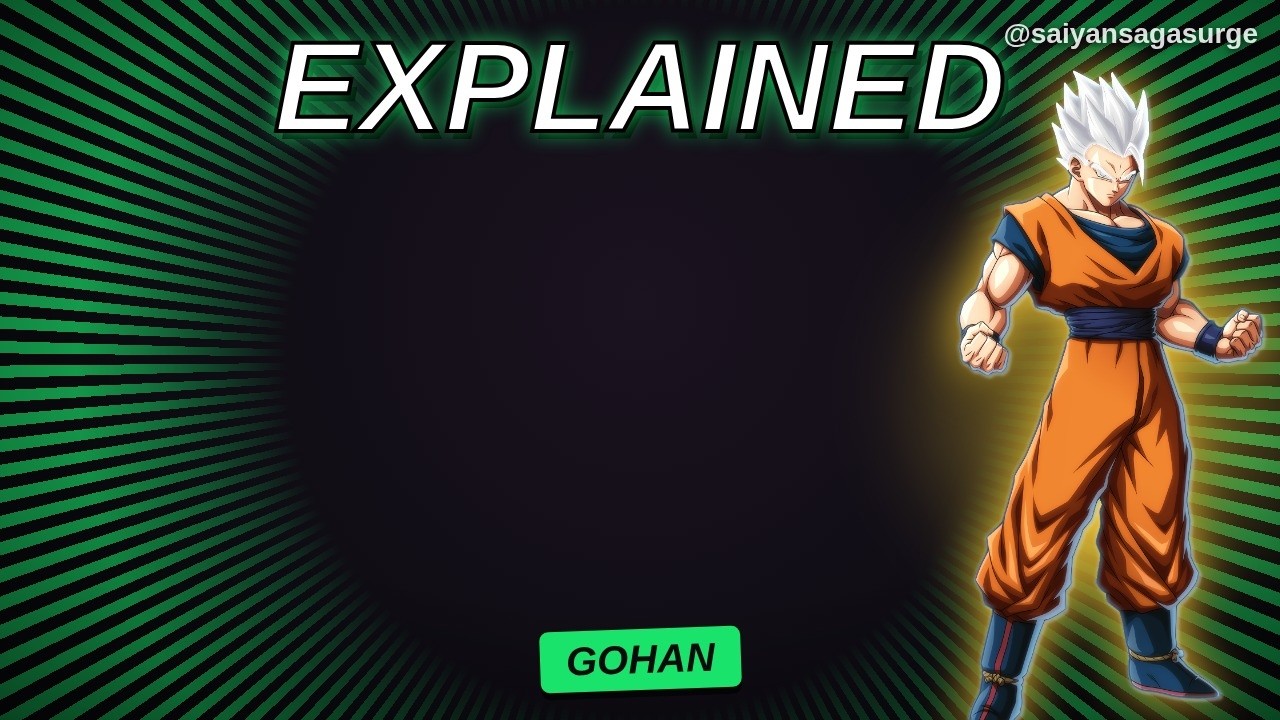
▶ The Unseen Weight of Gohan's Latent Power: Deconstructing the Psychological Burden of Untapped Potential in Dragon Ball | Subscribe to @saiyansagasurge
Disclosure: some links above are affiliate links — if you buy through them I may earn a small commission at no extra cost to you. Thanks for supporting the channel!
There's a character in Dragon Ball who consistently ignites heated debates, inspires boundless hope, and, frankly, frustrates the living daylights out of a significant chunk of the fanbase: Son Gohan. We've all seen the glimpses – the raw, untamed power that momentarily eclipses even the Saiyan elites, only to recede like a tide. But beyond the simple discussion of power levels or training regimes, there's a deeper, more profound narrative at play with our half-Saiyan scholar: the immense psychological burden of Gohan's latent potential. This article explores the unique mental and emotional challenges Gohan faces by possessing immense power he often struggles to embrace, distinguishing it from mere power scaling and traditional training analyses.
For me, as someone who's spent decades dissecting every frame and panel of Dragon Ball, Gohan's journey isn't just about how strong he *could* be. It's about the emotional weight of that 'could be,' the silent pressure of being constantly reminded of a dormant strength that the world, and even his own family, expects him to wield. It's a heavy mantle, one that profoundly shapes his personality, his choices, and ultimately, his path. This isn't just about whether he trains enough; it's about the very core of his identity being tied to a power he never truly asked for, creating a distinct Gohan latent potential burden that sets him apart from every other warrior.
The Genesis of a Prodigy: When Power Finds the Unwilling
From his very first appearance, a shy, timid four-year-old in a ridiculous little hat, Gohan was different. He wasn't like Goku, who practically burst from his crib ready for a fight. He wasn't Vegeta, obsessed with Saiyan pride and conquest. Gohan was, by all accounts, a normal kid who loved his mom and wanted to study bugs. Then Raditz showed up. And in that terrifying moment, trapped in Raditz's spaceship, we saw it: a burst of power so immense it shattered the scouter and sent a fully-grown Saiyan warrior reeling. This wasn't training; this was pure, unadulterated, desperate rage fueling an incomprehensible strength. It was the first manifestation of what would become Gohan's defining, yet often crippling, trait: his latent power.
Piccolo, ever the astute observer, immediately recognized this. He didn't see a future fighter; he saw a future *savior*. And that, my friends, is where the burden truly began. Piccolo's rigorous training, while undeniably effective, wasn't just about honing skills; it was about trying to force Gohan to acknowledge and control this immense, terrifying gift. Imagine being a child, wanting nothing more than to be home with your family, but constantly being pushed to the brink, because everyone around you senses you're capable of more. It's a tremendous psychological weight, an expectation laid upon a child who simply wasn't wired for battle.
During the Namek Saga, we saw it again. Faced with impossible odds – Frieza's terrifying power – Gohan would snap, momentarily outperforming even Krillin and Vegeta. The sheer ferocity he displayed against Frieza's second form, an emotional explosion fueled by his friends' suffering, was breathtaking. But these moments were always reactions, never proactive decisions to fight. They were involuntary spasms of immense power, born from necessity and trauma, not from a warrior's spirit. This pattern of reactive power, rather than deliberate application, becomes a recurring theme, deepening the Gohan latent potential burden.
The Cell Games: Apex and Aftermath
- The Unlocking of Super Saiyan 2: This was Gohan's definitive moment. Pushed by Android 16's sacrifice and Goku's confidence, Gohan transformed into Super Saiyan 2, absolutely dominating Perfect Cell. It was exhilarating! He had surpassed his father, seemingly fulfilling all those prophecies of his incredible potential.
- The Cost of Power: But what followed wasn't triumph; it was tragedy. Gohan, in his newfound arrogance and power, toyed with Cell, leading to Goku's sacrifice. This moment, more than any other, scarred Gohan. He learned that immense power, when wielded by someone not fully prepared for its responsibility, can have devastating consequences. This wasn't a lesson in combat; it was a profound psychological lesson about control, humility, and the heavy price of ego.
- The Retreat: The Cell Games victory was bittersweet, tainted by loss and Gohan's own perceived failure. It solidified his desire to reject the path of the warrior. He had done his duty, saved the world, but at what cost to his own soul? This profound experience further cemented the psychological burden of his immense strength.

The Burden of Unfulfilled Expectations: Why Gohan's Path Diverged
Unlike Goku, whose joy is fighting, or Vegeta, whose existence revolves around being the strongest, Gohan has always been driven by a different purpose: a desire for normalcy, for education, for family. He wants to be a scholar, a husband, a father. He doesn't crave battle; he endures it when absolutely necessary. This fundamental difference in motivation is the bedrock of his psychological struggle with his latent power.
Think about it: from the age of four, he's been thrust into life-or-death situations, seen unimaginable horrors, and repeatedly been told he's the key, the one with the "most potential." How crushing must that be for a child who simply wants to read books? It’s not just about getting strong; it's about being strong *enough* to protect everyone, which, for a character like Gohan, feels like an endless, exhausting responsibility. This constant pressure, both internal and external, contributes immensely to the Gohan latent potential burden.
Post-Cell Games, Gohan deliberately chose to prioritize his studies. He became the Great Saiyaman, a goofy superhero, not because he loved fighting, but because he saw it as a less destructive way to protect people, without fully embracing the warrior persona that had brought him so much pain. This was his attempt to reconcile his inherent power with his desire for a peaceful life. It was a coping mechanism, a way to use his strength without fully committing to the brutal reality of a Z-Fighter's life.
His reluctance to train isn't laziness; it's a deep-seated resistance to a lifestyle that conflicts with his core values and has historically brought him trauma. Every time he's forced back into battle, there's an internal struggle. He knows what he's capable of, but he also knows the psychological toll it takes. This isn't a simple "he just needs to train" scenario; it's a complex character arc about a person grappling with an extraordinary gift that feels more like a curse than a blessing.
Mystic Gohan: The Illusion of a Perfect Solution
The Buu Saga introduced what many fans initially thought would be the ultimate solution to Gohan's power struggles: the ritual performed by Old Kai. This ritual didn't require Gohan to transform into a Super Saiyan; it simply "unlocked" all of his hidden potential, making it accessible at will. The result was "Mystic Gohan" (or Ultimate Gohan, as some prefer to call it), a form where he achieved an incredible new level of power, easily surpassing Super Saiyan 3 Goku. He was calm, collected, and unbelievably strong. For a brief shining moment, it seemed like the ideal compromise: Gohan had all his power at his disposal, without the primal rage or ego that often came with Super Saiyan transformations.
But did it truly solve the psychological burden? Not really. While the ritual gave him the power, it didn't fundamentally change Gohan's desire for a peaceful life. After defeating Super Buu (with outside help, of course, as is tradition in Dragon Ball), Gohan went right back to his studies. He didn't maintain his training; he didn't seek out new challenges. Why? Because the core motivation still wasn't there. The ritual simply gave him the tools; it didn't instill in him the *will* to be a full-time warrior.
This is crucial: Old Kai's ritual removed the physical barriers to his strength, but it didn't remove the mental and emotional ones. The Gohan latent potential burden wasn't about *accessing* the power; it was about *wanting* to use it, *wanting* to maintain it, and *wanting* to live the life of a fighter. When the immediate threat was gone, Gohan reverted to his natural inclination, demonstrating that the source of his power wasn't a lack of ability, but a lack of desire to dedicate his life to it. This "peak" Gohan was still, at his core, the reluctant warrior.

Dragon Ball Super: The Constant Push and Pull
Dragon Ball Super has, in many ways, brought Gohan's internal conflict to the forefront again, often to the exasperation of fans. We see him severely depowered in the *Resurrection 'F'* arc, barely able to go Super Saiyan, a stark reminder of his years of neglect. This moment, for me, was a powerful visual representation of the consequences of his choices. He almost paid the ultimate price for prioritizing his family and career over martial arts. It's easy to criticize, but put yourself in his shoes: he's balancing a growing family, a demanding academic career, and the constant threat of cosmic destruction. It's an impossible tightrope walk.
However, Super also showed Gohan making conscious efforts to address his shortcomings. His training with Piccolo for the Tournament of Power was a significant turning point. It wasn't about just reacting; it was about Gohan *choosing* to regain his strength, specifically to protect his family. He acknowledged his weakness and his responsibility. This time, his motivation felt different – more proactive, less reactive trauma-response.
During the Tournament of Power, we saw a glimpse of that strategic, powerful Gohan, even achieving "Ultimate Gohan" status again, leading Universe 7's team in critical moments. But even then, the lingering question remained: would it last? Would this commitment continue once the immediate threat was gone? The Gohan latent potential burden is so deeply ingrained that even when he rises to the occasion, fans (and Gohan himself) often wonder if it's sustainable.
Beast Gohan: A New Chapter or Just Another Peak?
Then came *Dragon Ball Super: Super Hero*, and with it, "Beast Gohan." This transformation was explosive, visually stunning, and undeniably powerful. It felt like a true awakening, a response to a desperate situation (Pan being kidnapped) that pushed him beyond even his previous Ultimate form. It's a sign of his emotional depth and the extreme conditions that bring out his most incredible power.
But does Beast Gohan finally resolve the psychological burden? I'd argue it’s too early to tell definitively. It was, again, a reactive transformation, born from immense distress. While it's thrilling to see Gohan at this level, the true test will be if this power, and the dedication required to maintain it, integrate into his daily life without an immediate existential threat. Is Beast Gohan a permanent shift in his mindset, or just another incredible, but temporary, peak that will eventually recede if he doesn't actively pursue it? The jury is still out, but it offers the most hope yet for a Gohan who truly embraces his full strength.
The Weight of External Expectations: Everyone's Favorite "What If"
One of the less discussed aspects of Gohan's psychological burden is the constant external pressure and expectations from those around him, and from us, the fans. Piccolo constantly reminds him of his potential. Goku and Vegeta, despite their own ambitions, acknowledge Gohan's unique dormant strength. Even Whis has commented on it. There's this pervasive narrative that if Gohan *just trained*, he would surpass everyone. And honestly, it gets exhausting!
Imagine being told your whole life that you *could* be the best, that you *should* be doing more, even when your heart lies elsewhere. It’s an enormous pressure cooker. Every time a new villain appears, the question inevitably arises: "Where's Gohan? Why isn't he stronger?" This chorus of "what ifs" and "if onlys" adds another layer to his internal conflict. It’s not just his own struggle; it’s the struggle against a collective ideal of what he "should" be, rather than appreciating who he is.
This constant comparison to Goku and Vegeta, who live and breathe fighting, is unfair. Gohan is a different kind of hero. His heroism often comes from self-sacrifice, from stepping up when he absolutely has to, rather than actively seeking out confrontation. His courage is born from love and protection, not from a desire for glory or self-improvement through combat. Understanding this distinction is key to appreciating the depth of his character and the genuine difficulty of his Gohan latent potential burden.

Key Takeaways
- Gohan's immense latent power, while a gift, has been a source of significant psychological struggle rather than pure empowerment.
- His pacifist nature and desire for a normal, scholarly life constantly clash with the warrior path forced upon him.
- Traumatic experiences like the Cell Games reinforced his reluctance to fully embrace his power due to its potential for destruction.
- Even forms like Mystic Gohan and Beast Gohan, while incredibly powerful, often manifest reactively, highlighting his ongoing internal conflict.
- The constant external pressure from allies and fans to fulfill his "potential" adds another layer to his unique emotional burden.
Frequently Asked Questions
What is Gohan's latent potential?
Gohan's latent potential refers to the extraordinary, often hidden, power he possesses that far exceeds his current training or demonstrated abilities. Unlike other Saiyans who gain power primarily through rigorous training and Zenkai boosts, Gohan's strength frequently erupts in moments of intense emotion, particularly anger or desperation, often surprising even the most powerful foes and allies alike.
Why does Gohan struggle to use his full power?
Gohan struggles to consistently use his full power primarily because of his inherent desire for a peaceful, scholarly life, contrasting sharply with the warrior's path. He finds battle traumatizing and prefers to protect through peaceful means. This internal conflict, combined with the psychological weight of the immense power he displayed during the Cell Games (and the tragic consequences that followed), causes him to often neglect training and shy away from embracing his full strength unless absolutely necessary.
How is Gohan's latent potential different from Goku's or Vegeta's power?
Gohan's latent potential is fundamentally different from Goku's or Vegeta's power in its origin and manifestation. Goku and Vegeta gain power through a relentless, joyful pursuit of training, pushing their physical and mental limits consistently. Gohan's power, however, is often reactive and dormant, erupting in sudden, massive bursts driven by intense emotion and love for his family rather than a constant desire to fight or train. His power often surpasses theirs momentarily without the same dedication to combat.
Has Gohan's psychological burden ever been resolved?
The resolution of Gohan's psychological burden is an ongoing theme. While moments like achieving Mystic Gohan or Beast Gohan show him temporarily overcoming his reluctance and accessing incredible power, these often occur in crisis. The true resolution would involve Gohan fully integrating his power into his identity and consistently embracing his strength without an external threat. Dragon Ball Super has shown him making more conscious choices to train, offering hope that he is beginning to reconcile his desire for peace with his immense power and responsibility.
So, what do you think? Does Gohan's struggle with his latent power resonate with you? Is he a frustrating character, or one of the most relatable heroes in Dragon Ball because of his very human desire for a normal life? Drop your thoughts in the comments, and don't forget to follow @saiyansagasurge for more deep dives, passionate theories, and all things Dragon Ball!
Related reading
- The Unseen Art of Non-Ki Combat: Deconstructing Dragon Ball's Foundational Martial Arts Techniques Beyond Energy Blasts
- The Unseen Architects of Saiyan Society: Deconstructing the Tuffles' Lost Civilization and Their Technological Legacy in Dragon Ball
- The Sealing Power: Unpacking the Mafuba's Ancient Lore and Overlooked Strategic Potential in Dragon Ball
- The Grand Priest's Unseen Power: Decoding Angelic Neutrality and Cosmic Manipulation in Dragon Ball
- The Cosmic Power Grid: Deconstructing Energy Sources and Infrastructure Across Dragon Ball's Planets
- The Cosmic Court: Deconstructing Grand Kai's Planet as Dragon Ball's Untapped Afterlife Hub
- King Furry's Kingdom: Deconstructing Earth's Unseen Governance and Social Order in Dragon Ball
- Beyond Power Levels: Deconstructing the Ginyu Force's Unorthodox Combat Philosophy in Dragon Ball